
Care guide
Tending your stems:
how to keep cut flowers fresh
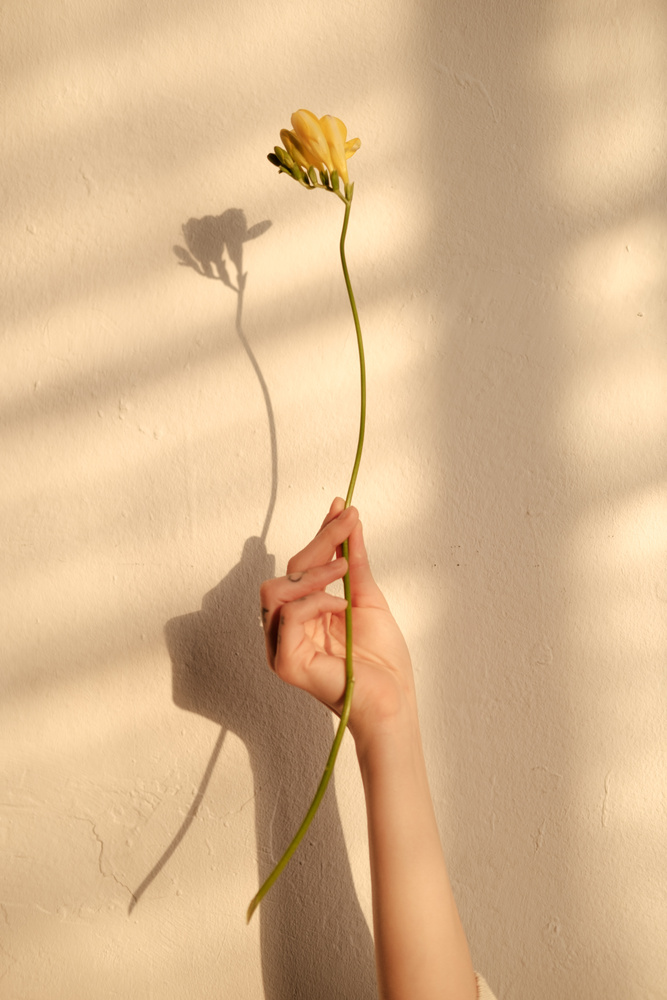
Give your flowers a little extra love to help them thrive. Cut stems are beautifully forgiving — almost everything that goes wrong with them comes down to one of five things, and all five take a moment.
Trim at an angle, under running water
Cut 1–2 cm (about an inch) off the bottom of each stem at a 45°angle, under running water. The angle opens the stem rather than letting it sit flat against the base of the vase, so it drinks as much as it can. Cutting under water means no air is pulled in while you do it.
Take off anything below the waterline
Gently remove every leaf that would sit under the water. Leaves left in turn the water cloudy and off-smelling within a day or two, which clogs the stems and shortens the life of the whole arrangement — so this is the habit that protects the others.
Give them fresh, cool water, and change it daily
A clean vase, filled with fresh cool water, changed every day. There is no need for anything to be added — a little sugar or a penny of vinegar is far more often harmful than helpful, and cut stems are already well fed when they arrive.
Keep them cool, and out of the sun
Somewhere bright but out of direct sunlight, away from draughts, radiators and ripening fruit. Fruit gives off a gas that makes cut flowers fade quickly, which is why a windowsill above the fruit bowl is the worst position of all.
Trim again every two or three days
Re-cut about half a centimetre off each stem, at an angle, and change the water at the same time. The cut seals over within hours; opening it again gives the stem a fresh edge to drink through and reliably doubles the life of the arrangement.
Caring for dried and preserved flowers
The wreaths are made from stems that are already dry or deliberately preserved, so the care reverses completely: no water, no trimming, no vase. Hang them somewhere dry and out of direct light, dust them gently with a soft brush now and then, and they will hold their shape through the seasons for years.
Colour shifts over time are part of how they age rather than a fault, so what you are looking at afterwards is not worse than what arrived — it is the same thing, a little further on.
How long cut flowers last
With the five habits above, most arrangements hold their best for a week and stay presentable for a good while after that. Some stems are simply longer-lived than others — chrysanthemums and carnations can run to three weeks, while a garden rose may give three or four good days before it drops its petals.
Two things shorten that quickly: a room that is too warm, and a vase that was not properly washed before the stems went in. Everything else is detail.
Common questions
How often should I change the water in a vase of flowers?
Every day, and in the morning if you can. A clean vase of cool water is the whole of it — stems that have been drinking from clear water for a day will keep drinking for days.
Why are my flowers wilting when the water is still fresh?
Almost always a blocked stem. Bacteria from the old water seal the cut end, or air has been drawn in through a stem that was trimmed dry rather than under running water. Re-trim the stems under water and move them into a freshly washed vase.
Can I put flowers in a vase alongside fruit?
Not without shortening their life. Ripe fruit releases ethylene gas, which makes stems fade and petals drop sooner. Keep the two apart and both last longer.
Do flowers last longer in the fridge?
Usually not at home. A domestic fridge sits well below the temperature most cut flowers prefer, and the scent of food will reach them through an open door. A cool windowsill out of direct sun is a better place than the fridge, though a florist fridge set a little cooler than your own will hold them.
How do I care for a dried or preserved wreath?
No water at all, and no sun. Keep it somewhere dry and out of direct light, dust it gently with a soft brush now and then, and it will hold its shape for years. Some shift in colour as they age, which is the natural part of them rather than a fault — see the terms for what that means if something arrives with you.